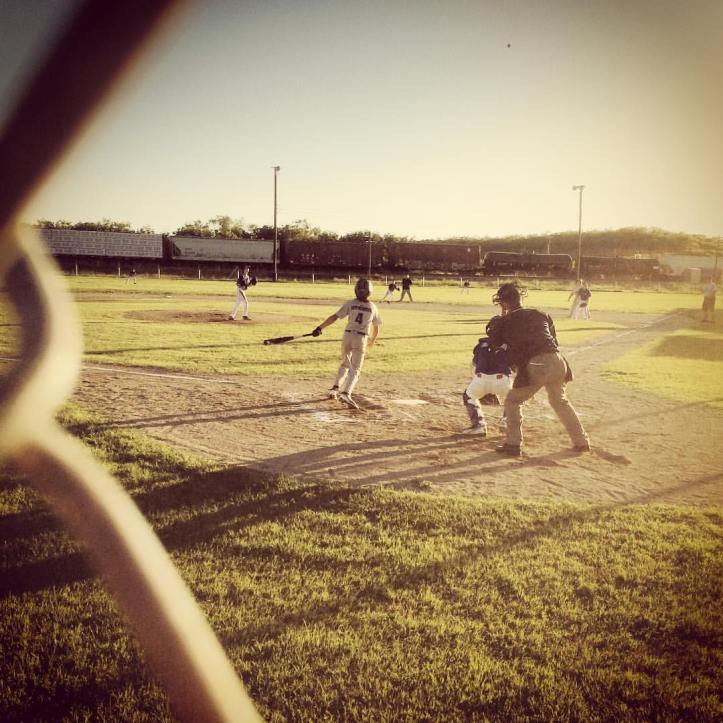
As Minor League Baseball enjoys a renaissance in America, it might surprise many to know that back during the roaring ’20s, one of the best minor league teams in West Texas hailed from the city of Coleman.
Baseball was introduced to Texas in the late 1800s by Confederate war veterans, northern entrepreneurs, and baseball enthusiasts looking to build their fortune in the Lone Star State, which had become the land of opportunity due to its vast resources and motivated city leaders who worked tirelessly to lure railroad, stage coaches, industry and agriculture to their communities.
In the 1880s, many cities had developed amateur city-teams which challenged neighboring city teams for bragging rights. Semi-pro baseball emerged from those teams, but with the arrival of Ted Sullivan in north Texas, businessmen began the idea of pursuing professional ball in Texas.
Major League Baseball had been a phenomenon in the Northeast for many years, and some tried, and failed, to bring Major-League caliber baseball to Texas. However, Sullivan understood that, while Texas would never have its own major league, the state could still field a high-caliber league that could draw thousands. Sullivan’s approach was to ignore prospective Major-League players, instead focusing on recruiting second-tier and developing players.
His approach became the basis for minor-league baseball. As Sullivan founded the Texas League, which still exists as an affiliated AA League today, many cities launched professional teams and formed independent professional leagues across the state, many hoping to eventually be admitted into the Texas League, which evolved into a premier league in the state.
Enter the West Texas League, a Class-D minor league which fielded teams from Eastland, Ranger, Abilene, Mineral Wells, Cisco and Gorman. The League played from 1920-1922 before folding. It reconstituted in 1928, and that’s when Coleman joined the league as an expansion team.
The Coleman Bobcats played from 1928-1929, winning the 1929 championship. Notable players from that team included Jo-Jo Moore, who went on to play for the New York Giants from 1930-1941, and Fabian Kowalik, who played for the Cubs, White Sox, Phillies and Boston Bees from 1932-1936.
Why put a professional baseball team in Coleman?
Times in the early 20th century weren’t much different from today. Cities used every tool they could to promote themselves for business and economic development. Having a professional baseball team was a great way to present yourself as economically viable to potential developers.
Cities would contribute funds to build ballparks. Local railroad companies and banks, two entities that benefited from all commercial development, often sponsored the teams. Players would be former high school and college greats looking to get noticed by scouts. Many were willing to play for free, just to stay in the game.
No doubt, those issues were at play when Coleman fielded a team in the West Texas League. During the 1920s and 1930s, the city saw an explosion in economic development as a result of the West Texas oil boom. The addition of new railroad spurred the growth, which spurred optimism.
The two years the Bobcats played in the West Texas League must have been great times for the city of Coleman. Perhaps as minor league baseball makes a comeback in Texas, we can once again enjoy the simple pleasures of peanuts, Crackerjacks and Dr. Pepper at an afternoon game at the ballpark.
 Pecan Valley Live
My father, Hallie Crumpton (far right in back row) told us many stories inc. Flop Harris, Cam Bess, and esp. John King. As I remember, the championship (a two out of three series) was won by forfiture. I believe the first game was played in San Angelo, with the last two in Coleman. My dad said Coleman evened the series in the second game much to the disappointment of John King, the colorful left hand slugger and manager for San Angelo. When game time arrived he next day the San Angelo team failed to show up at the ball field. Someone reported seeing John King and his team leaving town on a bus early that morning. John was later quoted, “You might tie Old John, but you’re never gonah to beat him!” My father said he and his teammates ran out on the field and took their positions, and the home plate umpire declared them the champions by forfit. I remember my dad having a baseball inscribed, “The Last Ball Caught in The West Texas Leauge 1929.” My Dad also said Flop Harris was especially irritating to John King because he was a left handed pitcher with a curveball King couldn’t touch. John reportedly declared “10,000 left handers went to war (WWI), and all 10,000 came back.”
LikeLike